

US Drone Tariffs: What Changes on September 3 and February 9


Most tariff coverage answers the question "how much." For anyone with a purchase order open, the more useful question is "by when," and the answer is not one date. It is two, and they are almost five months apart.
Here is the thesis of this page: the schedule matters more than the headline rate, because the two tranches hit opposite ends of the drone market at opposite ends of the calendar. The heavy and thermal equipment is affected first. The high volume small equipment is affected much later.
Everything below comes from the official White House fact sheet published with the proclamation. The calendar dates come from UAV Coach, which converted the stated delays into fixed days.
What the proclamation does, and when
The proclamation was signed on 13 August 2026. It sets two ad valorem rates, separated by size and by capability.
| Rate | What it covers, per the fact sheet | Delay stated | Calendar date, per UAV Coach |
|---|---|---|---|
| 100% | Drones with a maximum takeoff weight above 25 kg, drones with thermal imaging capability, their docking stations, and critical components | 21 days after signing | Thursday 3 September 2026 |
| 25% | Smaller drones that lack the capabilities identified as sensitive, and, in the words of the fact sheet, "other drone components" | 180 days after signing, for non sensitive components | Tuesday 9 February 2027 |
There is a third timing rule worth knowing about. The fact sheet describes an exception tied to the FCC covered list, also at 180 days after signing, for products that the Department of War approves within 20 days.
The proclamation also authorises the Secretary of Commerce to set up an onshoring programme for companies investing in new drone and drone component manufacturing in the United States. No details of that programme were published with the fact sheet.
The country grid, and the condition attached to it
Preferential rates exist, and they are not automatic. The fact sheet lists them as follows.
| Rate | Countries |
|---|---|
| 15% | European Union, Japan, Liechtenstein, South Korea, Switzerland, Taiwan |
| 10% | United Kingdom |
The condition is the part that decides whether a given shipment qualifies. The fact sheet states that the preferential rate applies where "substantially all hardware, software, and technology originates from within these countries and the United States."
Read that sentence twice before applying it. It is not a test of where a box ships from, and it is not a test of where a company has an office. It reaches through to hardware, software and technology together. A product assembled or warehoused in a listed country, but built substantially from components originating elsewhere, is not obviously covered by it.
We are not going to tell you how any individual product is classified. Tariff classification and origin determination are decisions for a customs professional working from the actual bill of materials, not something a retailer should infer from a country field in a catalogue. What follows is about the questions, not the answers.
How to read this if you are buying
Three practical readings, in the order they usually matter.
Sort your list by the September date, not by price. The 100% tranche is defined by two attributes that are easy to check on a spec sheet: maximum takeoff weight above 25 kg, and thermal imaging. If nothing on your list has either, September 3 is not your deadline and you have until February. If something does, that item has about two weeks of runway from the date of this article.
Docking stations and critical components sit in the first tranche too. This is the detail that catches fleet buyers. An operation can plan carefully around the aircraft and still be exposed through the infrastructure around it, because docking stations are named in the same tranche as the heavy and thermal aircraft.
Ask your vendor the origin question in writing, and ask it about the whole product. The useful question is not "where does this ship from." It is closer to: what proportion of the hardware, the software and the technology in this unit originates in the listed countries or the United States, and who at your company will put that in writing. A vendor who can answer that quickly has already done the work. A vendor who cannot may be discovering the question at the same time you are.
UAV Coach names DJI and Autel as the manufacturers behind the overwhelming majority of drones flying commercially in the United States. That is a useful thing to know when reading the 25% line: it is the tranche that touches the largest installed base, and it is the one that does not land until 2027.
Drones in our catalogue built by European manufacturers
Two of the drones we carry are designed and built by companies based in the European Union. We are listing them here as a fact about the manufacturer, and for no other reason. Nothing on this page should be read as a statement that either product qualifies for any particular tariff rate. That determination belongs to a customs professional and to the importer of record.
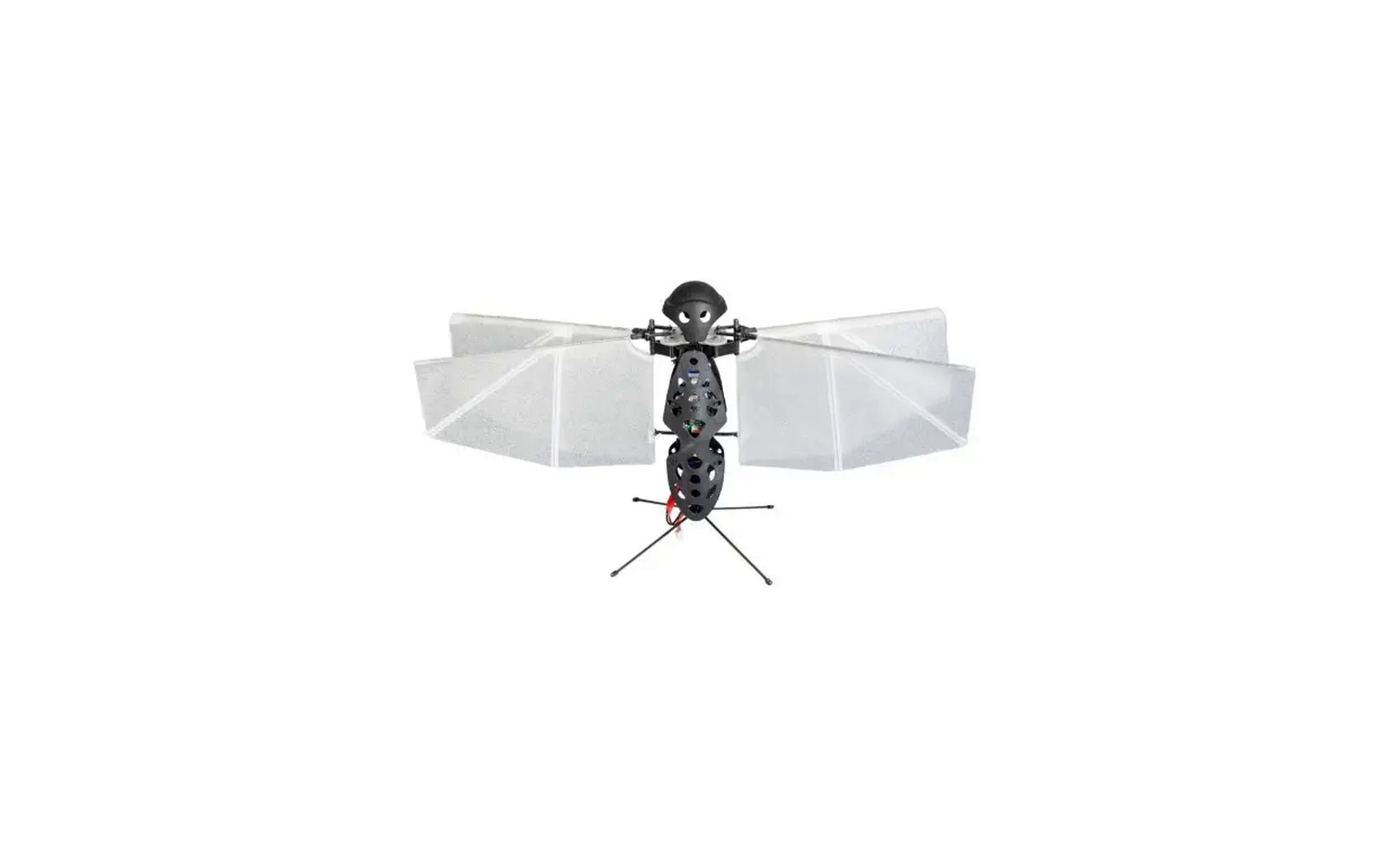
The Flapper Nimble+ Starter Kit comes from Flapper Drones, a company based in Prague, Czechia. It is a flapping wing platform rather than a rotorcraft, which makes it an unusual research object: the lift and the control authority come from the wings themselves, so it behaves differently from a quadcopter in ways that are the point of buying it rather than a limitation of it.
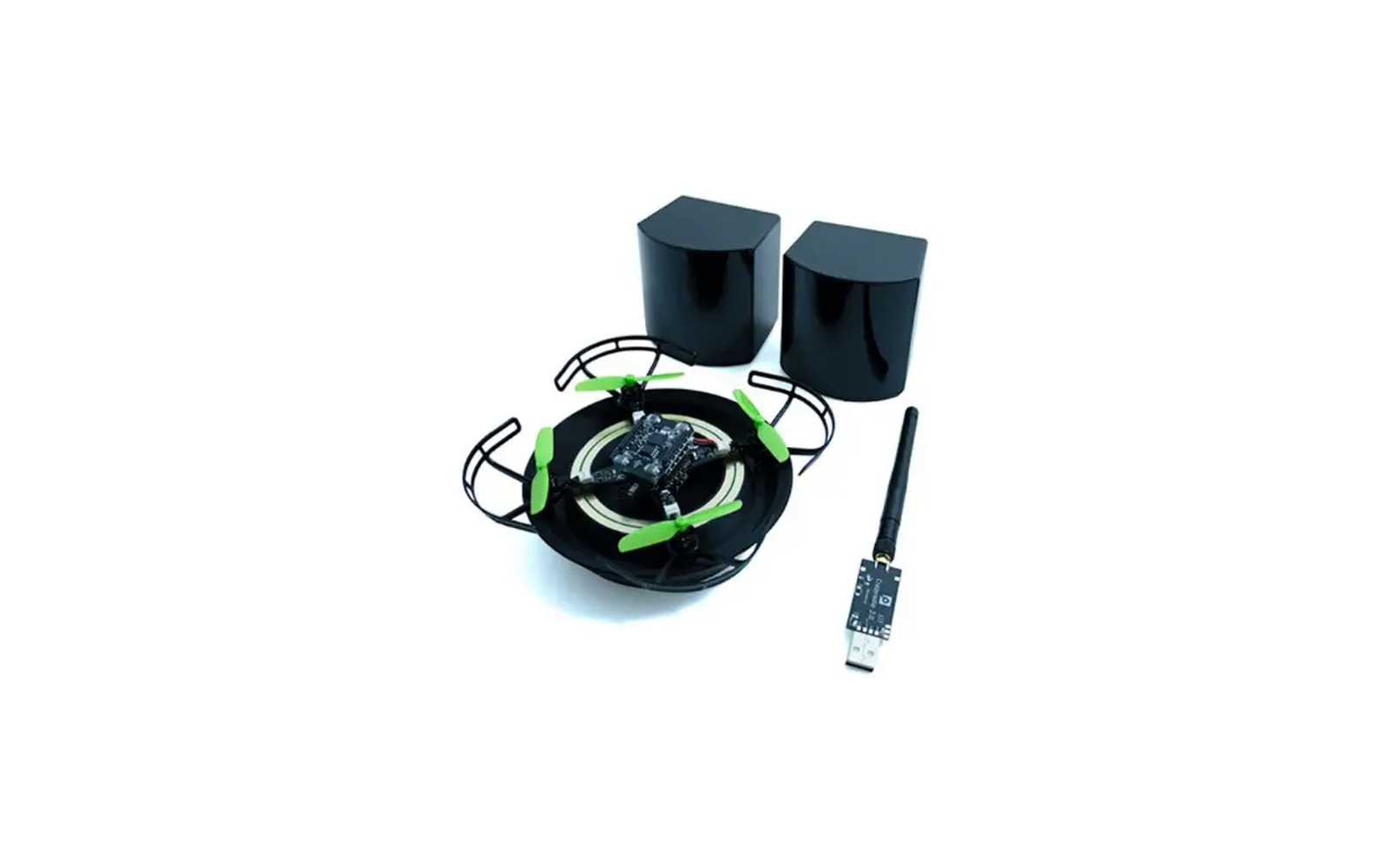
The Infinite Flight Bundle for the Crazyflie 2.1 Brushless comes from Bitcraze, based in Malmo, Sweden. The bundle pairs the nano quadcopter with wireless charging, which is what makes it interesting for a lab: a swarm or an endurance experiment that has to be interrupted every few minutes to swap batteries is not really an endurance experiment. The rest of the Bitcraze range shares the same open development stack.
What we are not saying
Three things, stated plainly, because the gaps matter as much as the content.
We are not forecasting prices. What a tariff does to a shelf price depends on the importer, the margin structure and the inventory already landed, and none of those are visible from a proclamation.
We are not giving classification advice on any product, ours or anyone else's. The origin fields in a product catalogue are logistics data. They are not a customs opinion, and they should not be used as one.
We are not treating this as settled. The onshoring programme has not been detailed, and the FCC related exception has a 20 day approval window attached to it. Both could change what the February tranche looks like in practice.
If you are building a shortlist right now, the two useful moves are the same ones as always: check the specification against the two attributes that define the first tranche, and get the origin answer from the vendor in writing. For related reading on judging hardware by delivery rather than by announcement, see our earlier pieces on judging robots on delivery rather than the demo and on choosing an educational humanoid platform.
Sources: White House fact sheet on the drone tariff proclamation, 13 August 2026. UAV Coach, "New Drone Tariffs Are Here: What Commercial Pilots Need to Know," 14 August 2026. Both consulted 18 August 2026.
Thanks for helping to keep our community civil!
This post is an advertisement, or vandalism. It is not useful or relevant to the current topic.
You flagged this as spam. Undo flag.Flag Post
Your post is currently under review by our moderation team. The review process usually takes up to 48 business hours.
You can track your post's status in the "My Content" section of your profile. Once approved, it will be published and visible to others.

Thank you for contributing to our community!