



LG’s CES 2026 World Premiere opened with a clear statement: “The Future is Human.”
Beyond the visuals, the message reflects a broader repositioning of how robotics is being framed, not as faster or smarter machines, but as systems designed around human environments and routines.
For years, robotics progress has been measured through performance metrics: autonomy levels, speed, compute, and sensing. LG’s CES 2026 announcements, including Zero Labor Home, the humanoid agent CLOiD, and the AXIUM actuator platform, suggest a different emphasis. The focus shifts from standalone automation to context-aware, embodied systems intended to operate within everyday human spaces.
For those tracking robotics beyond spectacle, this matters less for what CLOiD can do today and more for what it signals about where the industry is heading.
1. CLOiD: A Home Robot - With Real Questions Attached

CLOiD represents a move away from general-purpose home assistants toward task-specific, physically embodied agents. Rather than functioning as a voice interface or single-purpose appliance, CLOiD is presented as a mobile manipulation system designed to interact with the physical home environment.
Technically, the platform reflects current humanoid design consensus: two arms, articulated hands, and sufficient degrees of freedom to support manipulation rather than locomotion alone. LG’s use of a Vision–Language–Action (VLA) model allows CLOiD to interpret context, not just commands, bridging the gap between seeing an object and knowing how to interact with it.
The Gap Between Demonstration and Deployment
However, CES demonstrations warrant caution. Several practical questions remain unresolved and largely unaddressed on stage:
- Speed: Does CLOiD operate at a pace compatible with daily life, or at a slowed, demo-friendly rate?
- Autonomy: Were tasks executed autonomously, or through teleoperation and scripted sequences?
- Reliability: How many retries, errors, or human interventions were edited out?
- Price: Is this positioned as a $2,000 appliance-class system or a $20,000 premium device? In consumer robotics, pricing is not a detail — it is the adoption gate.
None of these questions invalidate the platform. But they define the gap between demonstration and deployment. CLOiD is best understood not as a finished product, but as a statement of intent about what LG believes home robotics should prioritize.
2. “Affectionate Intelligence” as a Design Framework

LG approaches this from a domestic systems perspective. The company has decades of experience designing appliances that adapt to human routines, adjusting washing cycles, managing food storage, or guiding cooking processes. CLOiD extends this logic into robotics, where the emphasis is on continuity with familiar behaviors, not introducing entirely new interaction models.
The related concept of Ambient Care, where environmental systems adjust lighting, temperature, or suggestions based on context, illustrates this approach. Instead of asking users to adapt to robots, the system adapts to existing human patterns.
This framing highlights a critical distinction in consumer robotics: adoption is driven as much by behavioral fit as by technical capability. Robots that align with established routines are more likely to persist beyond novelty.
3. Democratizing Motion: LG Actuator AXIUM™: A New Signal for the Industry
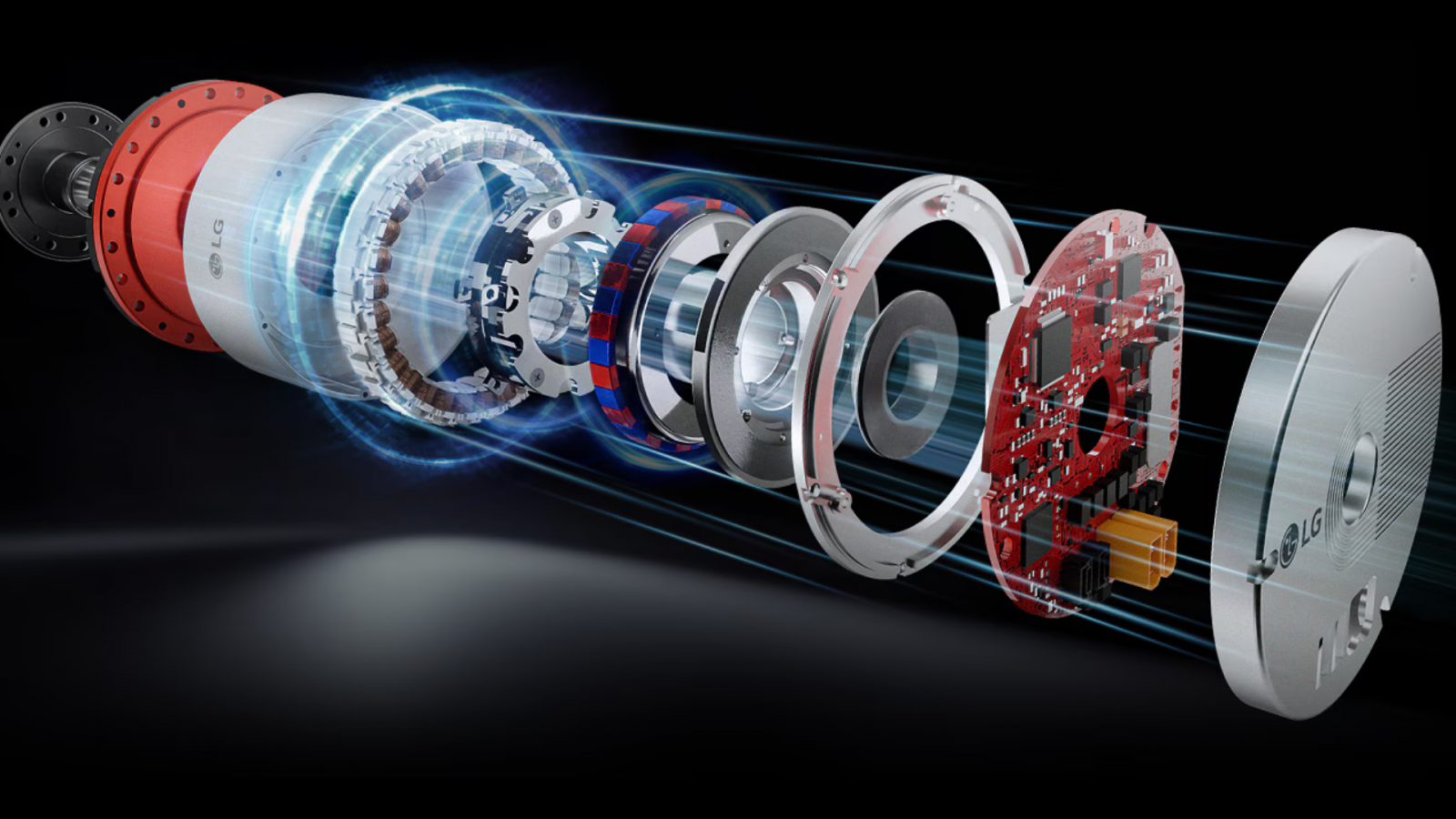
From an industry perspective, the most consequential announcement may not be CLOiD at all, but AXIUM™.
AXIUM positions LG as a supplier of standardized robotic actuators: compact joint modules integrating motors, gearing, and control. Drawing on decades of experience in high-volume motor manufacturing, LG is signaling a shift from robot maker to robot enabler.
This is a strategic hedge. If CLOiD succeeds, AXIUM powers it. If CLOiD fails, AXIUM can still win by powering competitors.
The move resembles what companies like Samsung achieved in displays or what NVIDIA achieved in compute: becoming infrastructure providers rather than betting on a single product. If AXIUM achieves scale, it could lower development barriers for humanoid and service robotics companies and reshape cost structures across the industry.
This is where LG’s announcement moves beyond CES theatrics and into long-term strategy.
4. Robotics as an Ecosystem, Not a Product Line
LG also emphasized collaboration over vertical integration. Its majority stake in Bear Robotics reflects a strategy centered on software-defined robotics, combining LG’s manufacturing scale with Bear’s proven autonomy and navigation software for crowded, dynamic environments such as restaurants and commercial spaces.
Rather than positioning robotics as a standalone product category, LG frames it as part of a broader Smart Life Solution strategy spanning homes, hospitality, logistics, and commercial environments. This mirrors a wider industry trend: robots as platforms embedded into operational ecosystems, not isolated devices.
The Verdict
LG’s CES 2026 presentation does not signal that humanoid robots are ready for mass deployment. What it does signal is a shift in priorities.
The focus is moving away from headline-grabbing demonstrations toward systems designed for integration, reliability, and behavioral compatibility. CLOiD, AXIUM, and LG’s ecosystem strategy collectively point to a robotics future where success is defined less by spectacle and more by sustained usefulness.
In that sense, the message is not that the future has arrived, but that the industry is beginning to ask more practical questions about how robots will actually fit into human life.
Stay Updated on CES 2026
This is just a glimpse of what CES 2026 has to offer. Over the coming days, we’ll be diving deeper into booths and showcased robotics.
To stay up to date:
- Follow RobotShop for show-floor highlights and key robotics moments
- Follow Peter Kappes for firsthand CES footage and humanoid robotics coverage
- Read our CES blog coverage for post-event analysis and trend breakdowns
Whether you’re building, integrating, or evaluating robotics and AI systems, our CES coverage is designed to deliver clarity - not spectacle.
From Prototype to Deployment
Discover RobotShop's Humanoids platforms and solutions.
Explore Professional Robotics Platforms