



At CES 2026, Hyundai Motor Group and Boston Dynamics used the keynote to present Atlas as an industrially targeted humanoid, shifting the focus from research demonstrations toward deployment in factory environments.
While Atlas was clearly the technical centerpiece of the event, the presentation also outlined the next phases of Atlas deployment, from pilot validation to broader factory rollout, and highlighted a strategic partnership with Google DeepMind.
Atlas: From Prototype to Actual Product
Unlike earlier iterations of Atlas designed to explore mobility and manipulation in controlled settings, this product version reflects a shift toward operational priorities: safety, reliability, predictability, and scalability in real industrial environments.
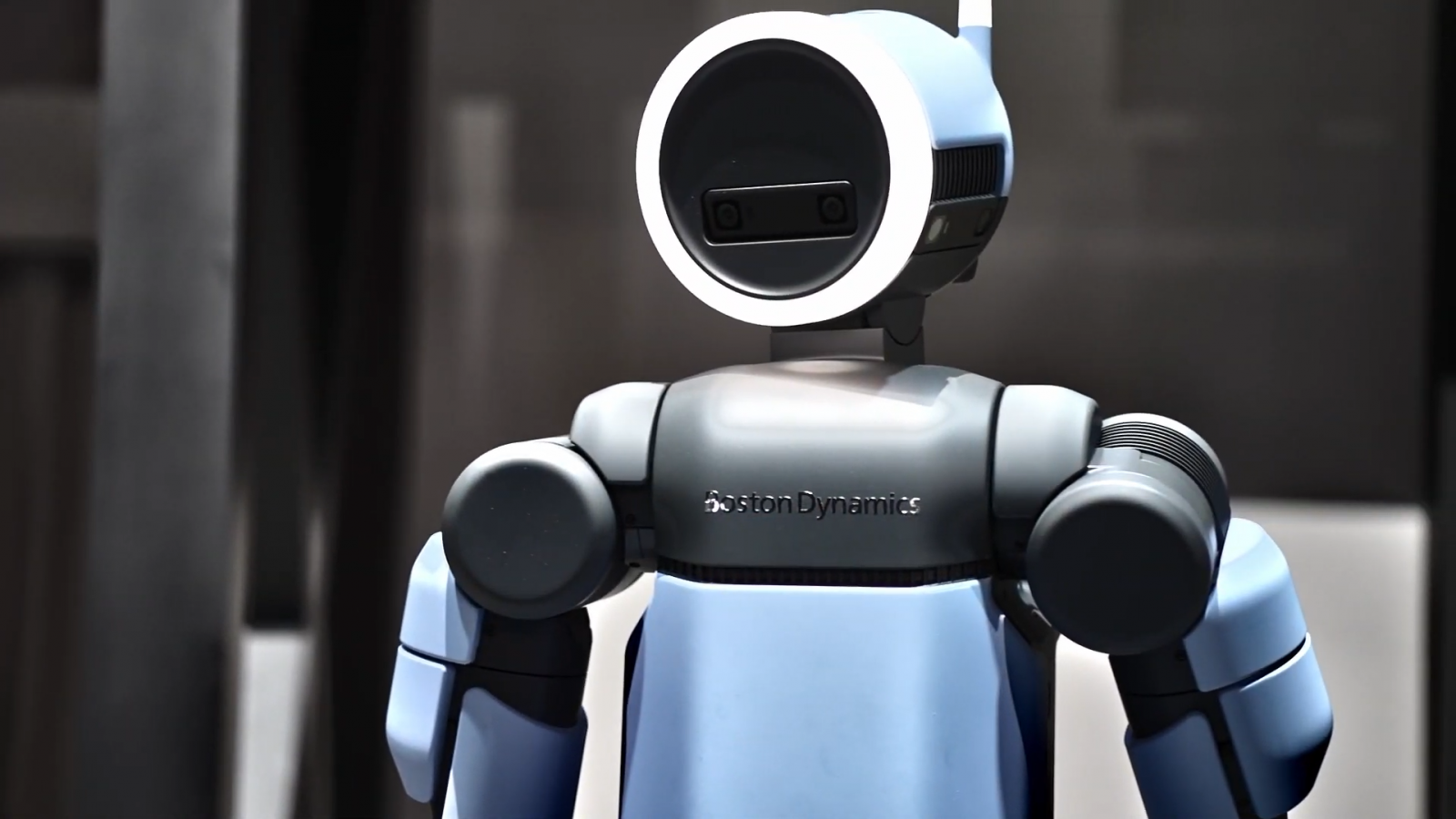
Although pricing has not been revealed and deployment is still in progress, Boston Dynamics presented a clear picture of Atlas’s product-level capabilities. Atlas is becoming a human-scale humanoid built around an architecture optimized for deployment rather than demonstration.
Key Technical Characteristics
Core Physical & Mechanical Design
- 56 degrees of freedom: High range of continuous joint motion.
- Human-scale proportions: Enabling operation within existing workspaces.
- Industrial Balance: Optimized for stability and efficiency rather than showcase-style athletics.
Manipulation & Perception
- Tactile Sensing: Hands designed to support repeatable and consistent manipulation.
- 360-Degree Perception: Visual awareness of people and surroundings for integrated safety.
Performance & Durability
- Lift Capacity: Up to 50 kg (110 lb), suitable for demanding tasks.
- Factory-Ready: Weather-resistant design suitable for standard warehouse environments.
Power & Uptime
- Runtime: Approximately 4 hours per charge (task dependent).
- Autonomous Swapping: Battery swapping enabling continuous operation without manual intervention.
Beyond the hardware, Boston Dynamics emphasized how Atlas is intended to be integrated and scaled. Some tasks can be trained in under a day, and once learned, skills can be distributed across fleets.
Google DeepMind Partnership with Boston Dynamics
Another key dimension of the Atlas reveal is how learning and intelligence are being addressed. Rather than relying solely on task-specific programming, Boston Dynamics emphasized adaptability through onboard perception and integration with higher-level AI systems.
This context underscores the significance of the Google DeepMind Robotics partnership. The collaboration focuses on integrating large-scale AI models aimed at improving perception, decision-making, and skill acquisition. The objective is to enable robots like Atlas to interpret instructions, understand task context, and acquire new skills more efficiently.
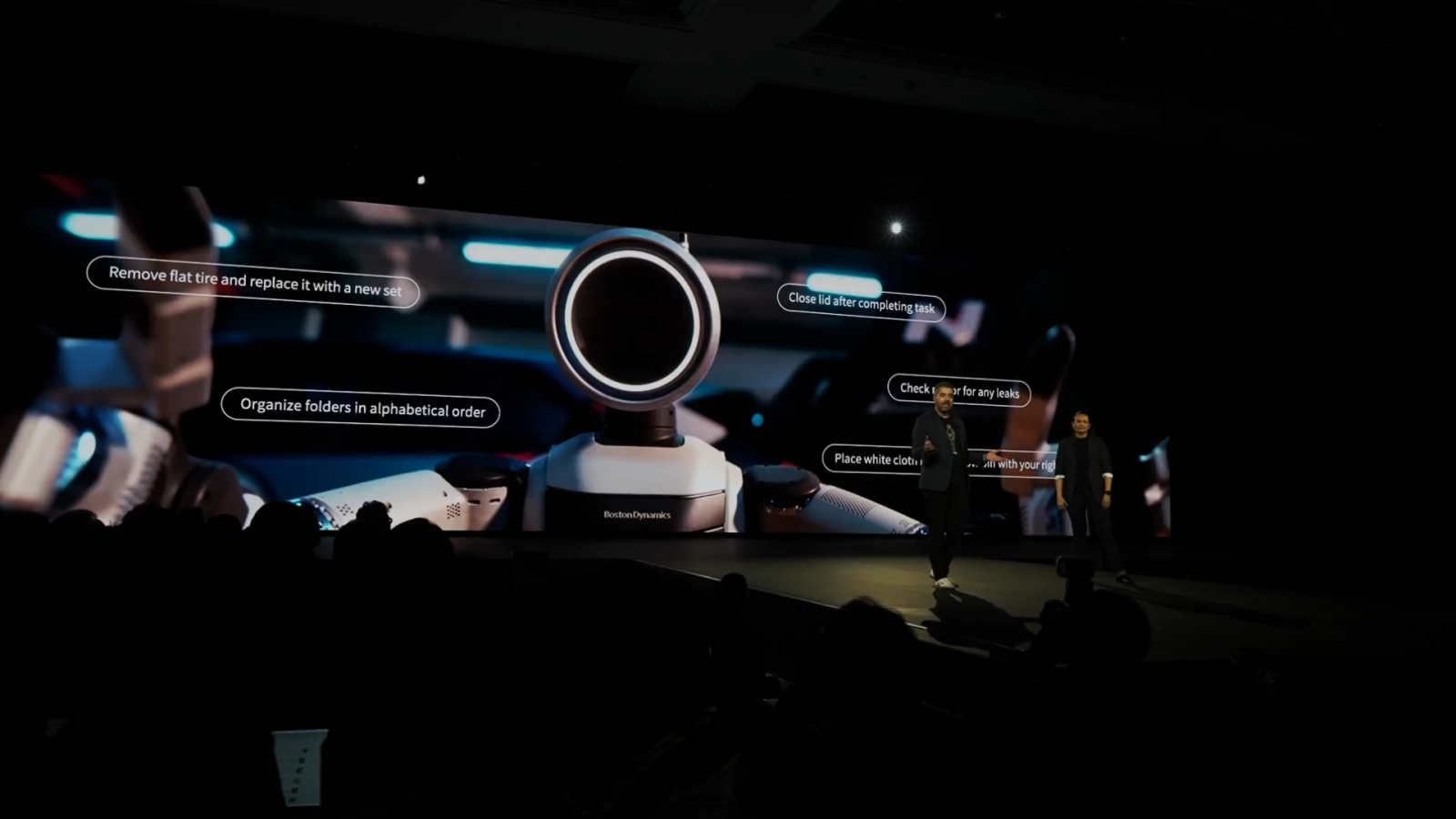
For the robotics industry, this aligns with a broader shift toward decoupling physical capability from task intelligence, while allowing both to evolve together. Atlas is being positioned as a platform that can grow in capability as learning models improve, without requiring fundamental hardware redesign.
This signals a future where humanoid robots are not locked into narrow use cases, but can be integrated into evolving operational flows, particularly in environments where flexibility and human collaboration are essential.
Production Reality & Deployment Roadmap for Atlas
Boston Dynamics confirmed that production of the new Atlas has already started, with the entire 2026 supply allocated to Hyundai Motor Group and AI research partners.
As Jackowski explained on stage: “We’ve already started production of this new robot at our Boston headquarters… We are building a new robotics factory capable of producing 30,000 Atlas robots a year.”
Deployment Roadmap for Atlas
Rather than promising immediate general-purpose autonomy, Boston Dynamics outlined a staged approach:
- 2026: Initial validation and training at the Robot Metaplant Application Center (RMAC).
- 2028: Early industrial use focused on high-precision sequencing tasks.
- 2030: Expansion toward complex assembly operations.
This approach reflects a pragmatic understanding of industrial robotics adoption: start with constrained, high-value tasks, validate safety and reliability, then scale.
For engineers, operators, and robotics companies, this roadmap provides concrete context for when humanoid robots may realistically enter production environments and how their roles are likely to expand over time.
Human-centered Robotics: Real-World Validation & Success
Opening the presentation with Spot, a robot already deployed globally in industrial and commercial environments, reinforced an important message: this team has experience moving robots from prototype to product. Spot’s performance served as a reminder that successful robotics deployment depends on real-world validation, not demonstrations alone.
Throughout the event, speakers emphasized a human-centered robotics approach, robots designed to work alongside people rather than replace them. This framing, echoed across technical, manufacturing, and AI discussions, reflects a growing consensus in industrial automation: collaboration and augmentation are more viable paths to adoption than full replacement.
Why This Reveal Matters
The Atlas product version reveals a shift from conceptual humanoids to systems designed for deployment at scale. It establishes a new reference point for humanoid robotics by demonstrating how design and engineering trade-offs are being made deliberately in favor of reliability, integration, and real-world applicability, rather than experimental performance alone.
It signals the beginning of a more grounded, execution-focused phase for humanoid robotics.
*The statements reflect on-stage remarks and demonstrations presented during Hyundai & Boston Dynamics CES 2026 keynote.
Stay Updated on CES 2026
This is just a glimpse of what CES 2026 has to offer. Over the coming days, we’ll be diving deeper into booths and showcased robotics.
- Follow RobotShop for show-floor highlights and key robotics moments.
- Read our CES blog coverage for post-event analysis and trend breakdowns.
Available Humanoid Robots
To explore humanoid robots that are currently available, visit RobotShop’s collection of Professional Humanoid Robots, featuring platforms from leading brands such as Unitree Robotics, LimX Dynamics, and Hanson Robotics.
View Humanoid Robotics Platforms